Envisioning Spatial Justice
Explorations, Reflections Design

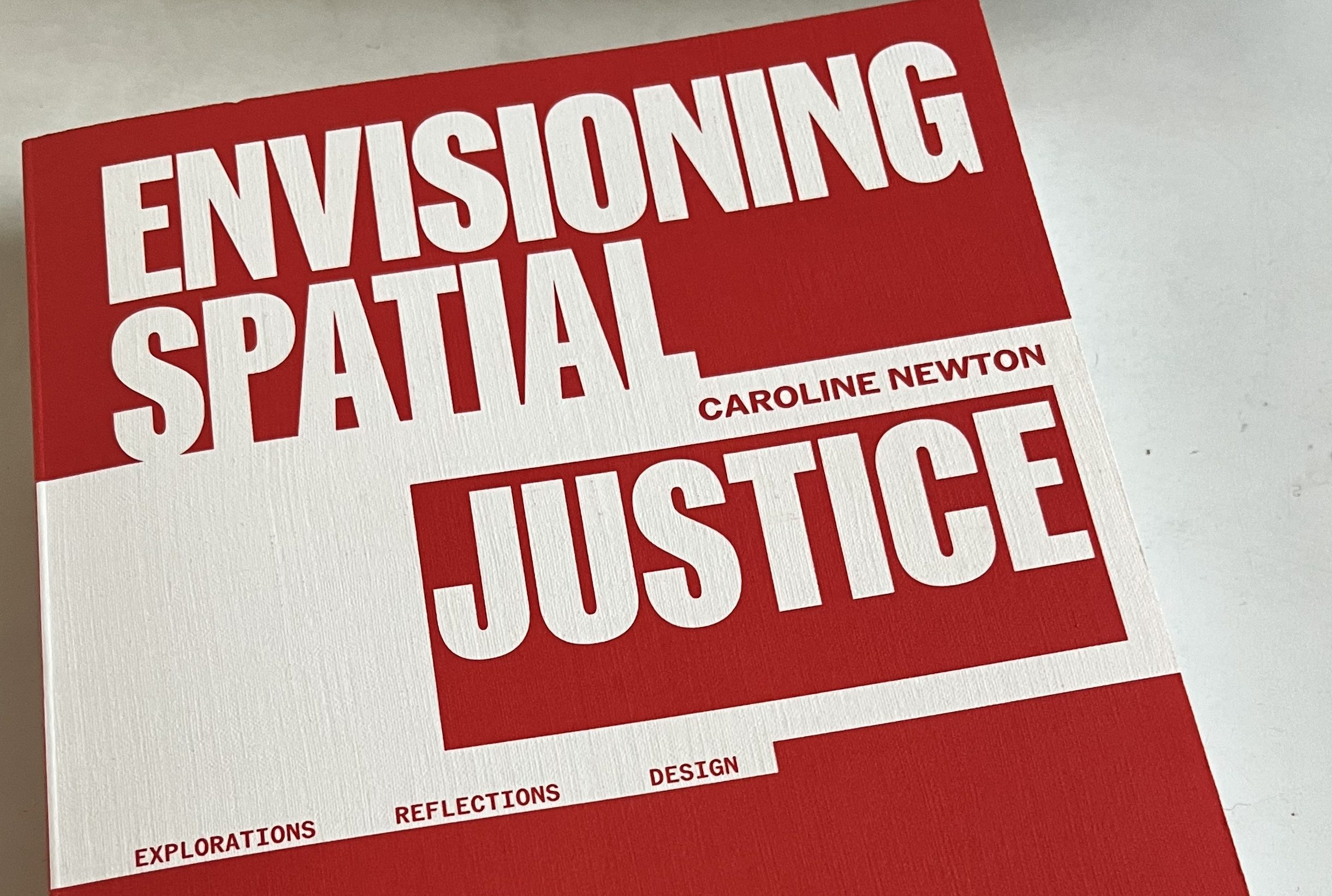
Envisioning Spatial Justice. Explorations, Reflections, Design
Caroline Newton
Jap Sam Books, 2025
ISBN 978-94-93329-44-7
What does it mean to design with justice in mind?
This book gathers the results of my five years as Van Eesteren Fellow at TU Delft. It brings feminist, postcolonial and radical urban theory together with studio teaching and the graduation work of my students. It argues that imagination is a political tool. Design gives that imagination a form we can test, debate and build.
A stop on a longer voyage
Like the rebels in Star Wars, I was drawn to the battles for space and rights in cities around the world. This book is a stop on that voyage: a harbour where I unload the reflections and insights I gathered over the years, ready to embark on a next journey, exploring questions of spatial justice, design, politics and inclusive cities in more detail.
Inside the book
The structure of this book unfolds over four parts.
Part I: Exploring Spatial Justice
In four chapters, I lay the foundations. I look at how neoliberalism and rising nationalist movements put democracy under pressure, and trace ideas of justice from Plato and Rawls to Marcuse, Harvey and Soja. I then use distributive, procedural and recognition justice as lenses for evaluating urban interventions, and bring in critical feminism and intersectional thinking, which ask designers to recognise their own position. The last chapter treats design as a socio-political practice that needs imagination to challenge dominant paradigms.
Part II: Reflections on Spatial Justice
I invited three colleagues to reflect from their own disciplines: Roberto Rocco on how the capabilities approach can widen people’s opportunities in the city, Juliana Gonçalves on participation from ancient amphitheatres to digital arenas, and Rodrigo Viseu Cardoso on degrowth and on models of development that put well-being and ecological balance first.
Part III: Design Approaches to Spatial Justice
Former students show how justice can take shape in physical and procedural design. My chapter Pedagogies of Hope opens this part and asks how critical thinking and engaged learning can change studio education. Eight graduation projects follow: Daniëlle Lens on Syrian refugees in Dutch cities, Jonah van Delden on masculinities in public space, Johnathan Subendran on an alternative design consciousness for the Eelam Tamil communities in Sri Lanka, Wendy van der Horst on climate-induced migration along the border between California and Mexico, Oliwia Jackowska on women and the gendered order of Vienna, Małgorzata Rybak on queering spatial planning in Poland, Divya Gunnam on gender and public space in Bengaluru, and Marh Echtai on segregation and spatial justice in Syria.
Part IV: A Call for Justice
The book closes with an essay and my personal manifesto. Escalating wars, political extremism, environmental crises and growing inequality shape the essay Let Us Be Radical, in which I call on us, as planners and designers, to be radical in our designs as well as in our professional ethos and academic work. I also name the paradoxes of this pursuit, such as our professions’ complicity in systemic injustice and how hard solidarity is in a divided world.
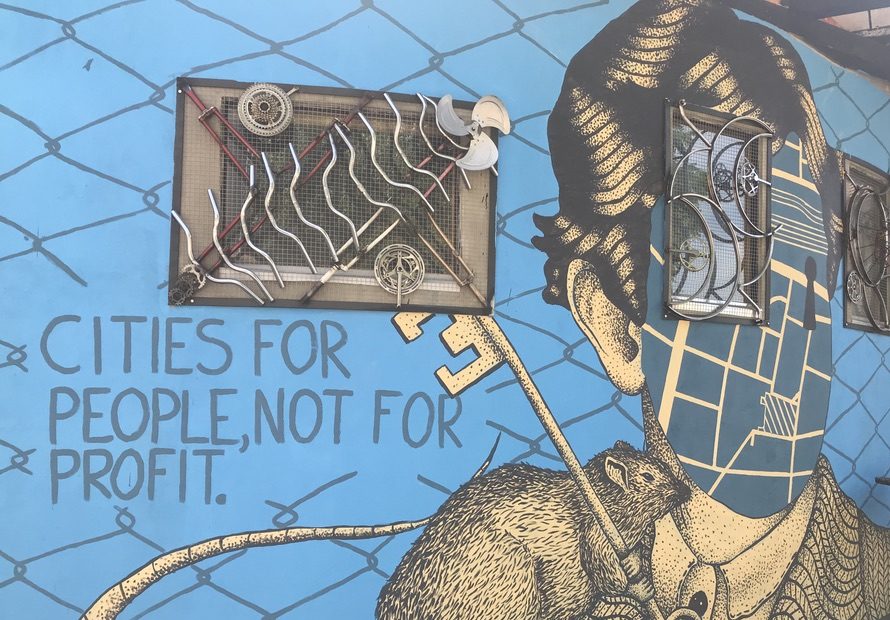
Between the chapters are photographs of what I call imprints of contestation. They show how the city and its inhabitants speak back.
A hopeful spatial planning practice
The book closes with my manifesto. These are its principles:
Embrace critical reflection and slow contemplation
Protect and nurture imagination and creativity
Foster genuine participation and co-creation
Challenge neoliberal paradigms and structural inequities
Ground our practice in ethics and a commitment to justice
Leverage education as a tool for transformation
Build coalitions and networks for collective power
Commit to sustainability and resilience
Meeting challenges with courage and honesty
Teaching with the book
With the Centre for the Just City, we made an online companion to the book. It offers chapter guides with discussion questions, a glossary and three course designs: a five-week undergraduate module, a six-week master’s seminar and a short course for practitioners. Open the companion.
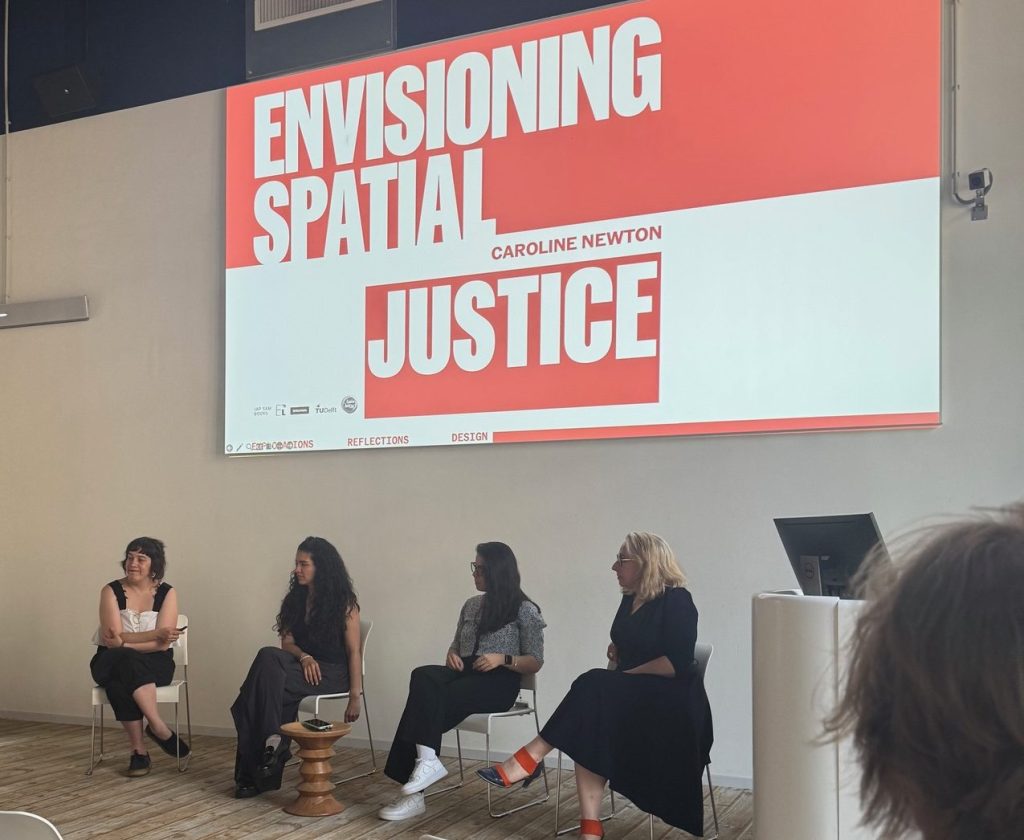
Launch and recognition
We launched the book at TU Delft on 13 June 2025, with a panel and a public conversation. In October 2025, the AA Bookshop in London selected it as one of its ten must-read books. Read my blog post about the book: Envisioning Spatial Justice. You can order the book from Jap Sam Books.